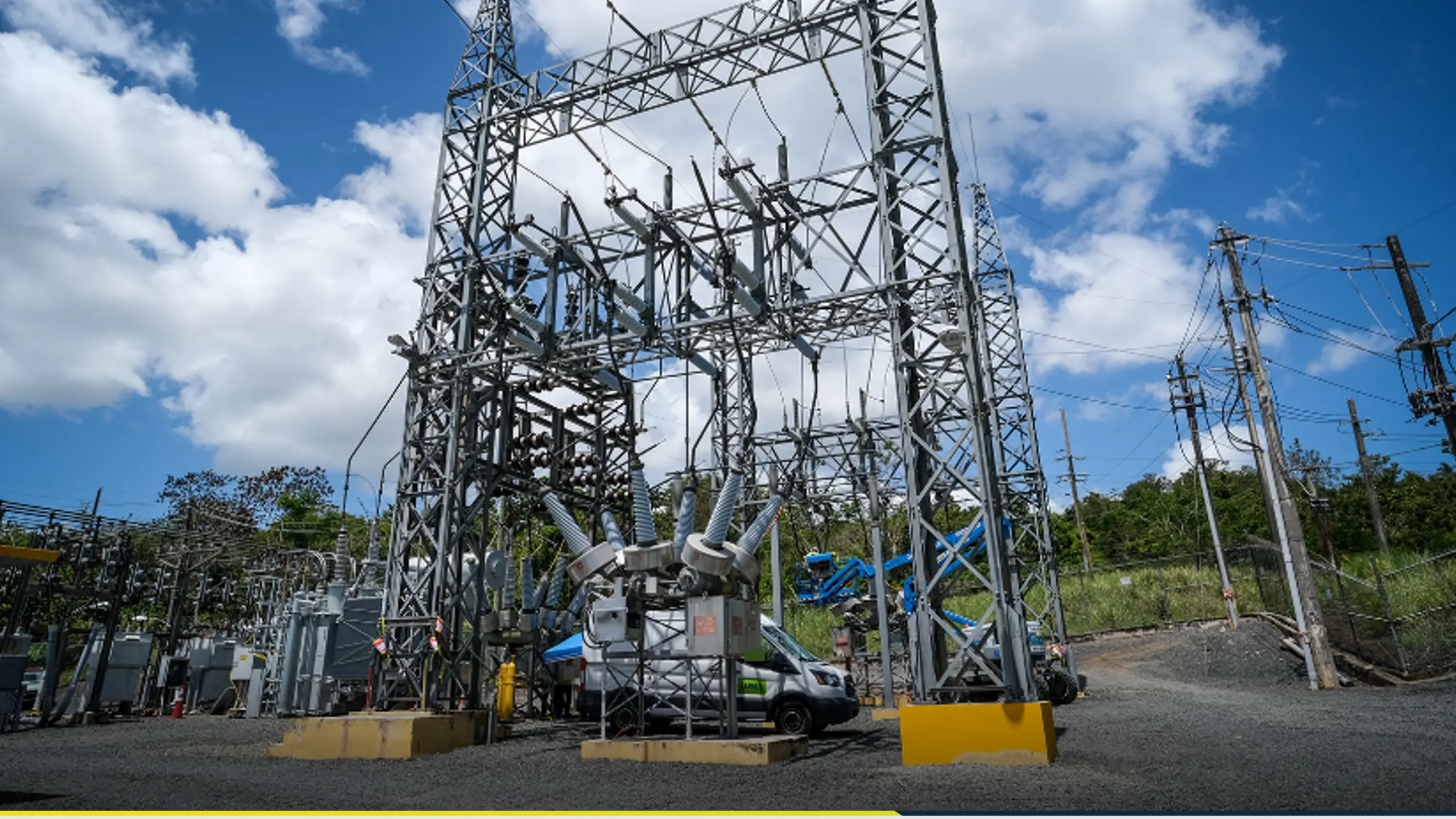
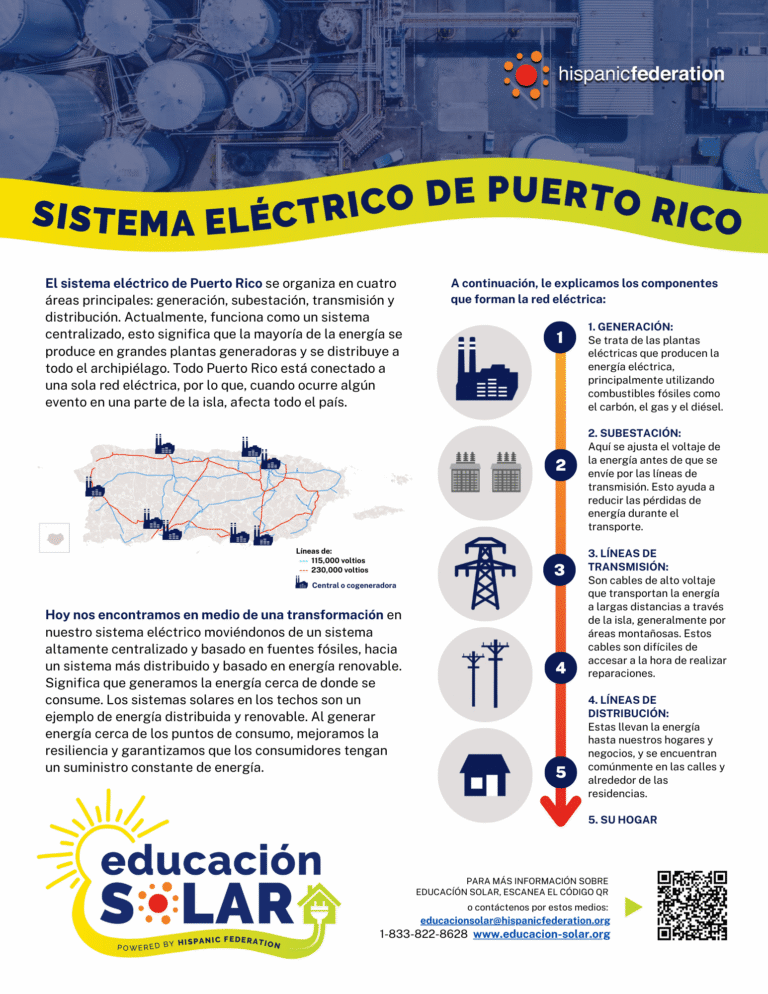
Puerto Rico’s electrical system is organized into four main areas: generation, substation, transmission, and distribution. Currently, it operates as a centralized system, this means that most of the energy is produced in large generating plants and distributed throughout the archipelago
How does the electrical system work in Puerto Rico?
All of Puerto Rico is connected to a single power grid, so when an event occurs in one part of the island, it affects the entire country.
Components:
Generation:
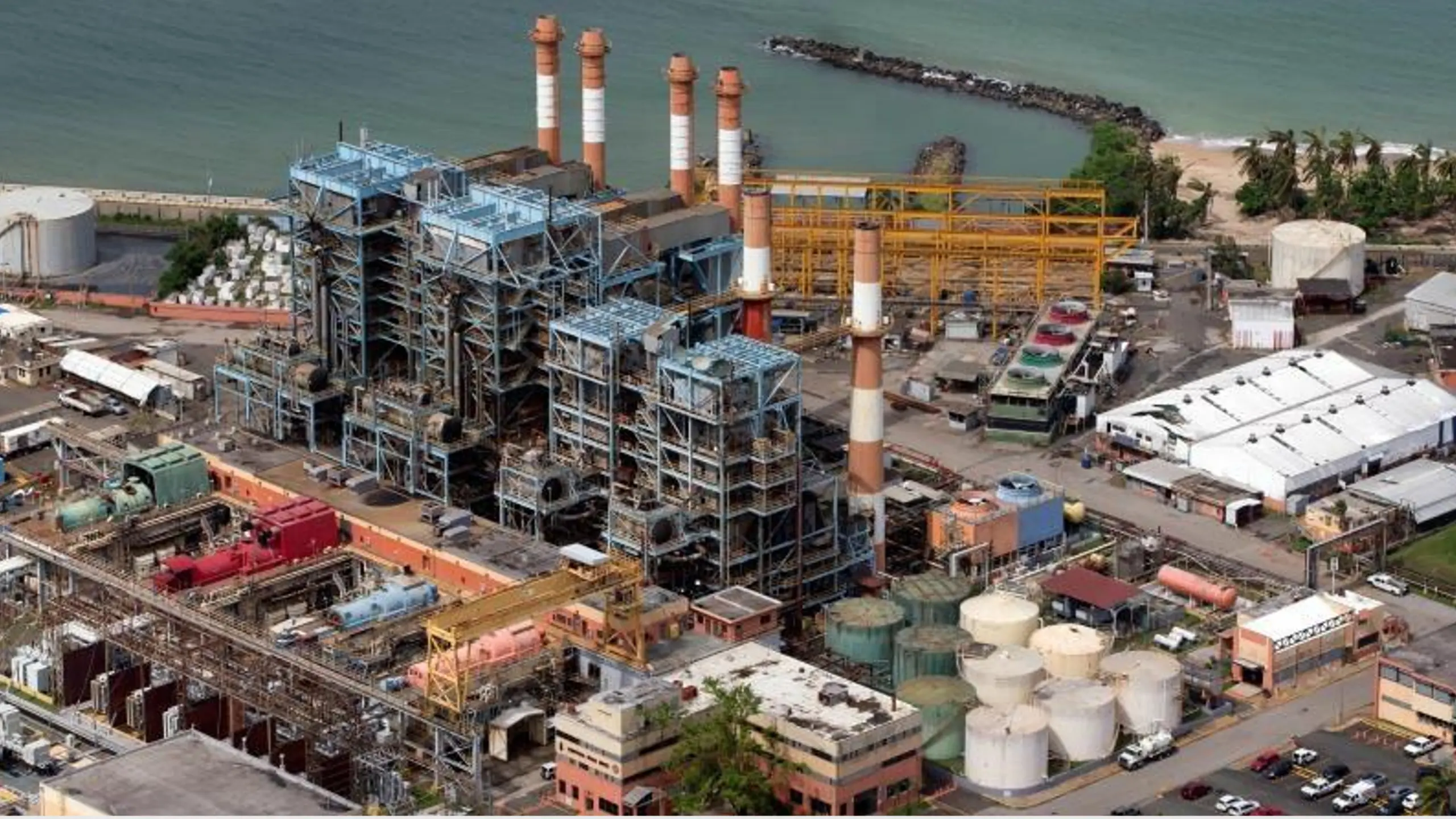
These are the power plants that produce electricity, mainly using fossil fuels such as coal, gas and diesel.
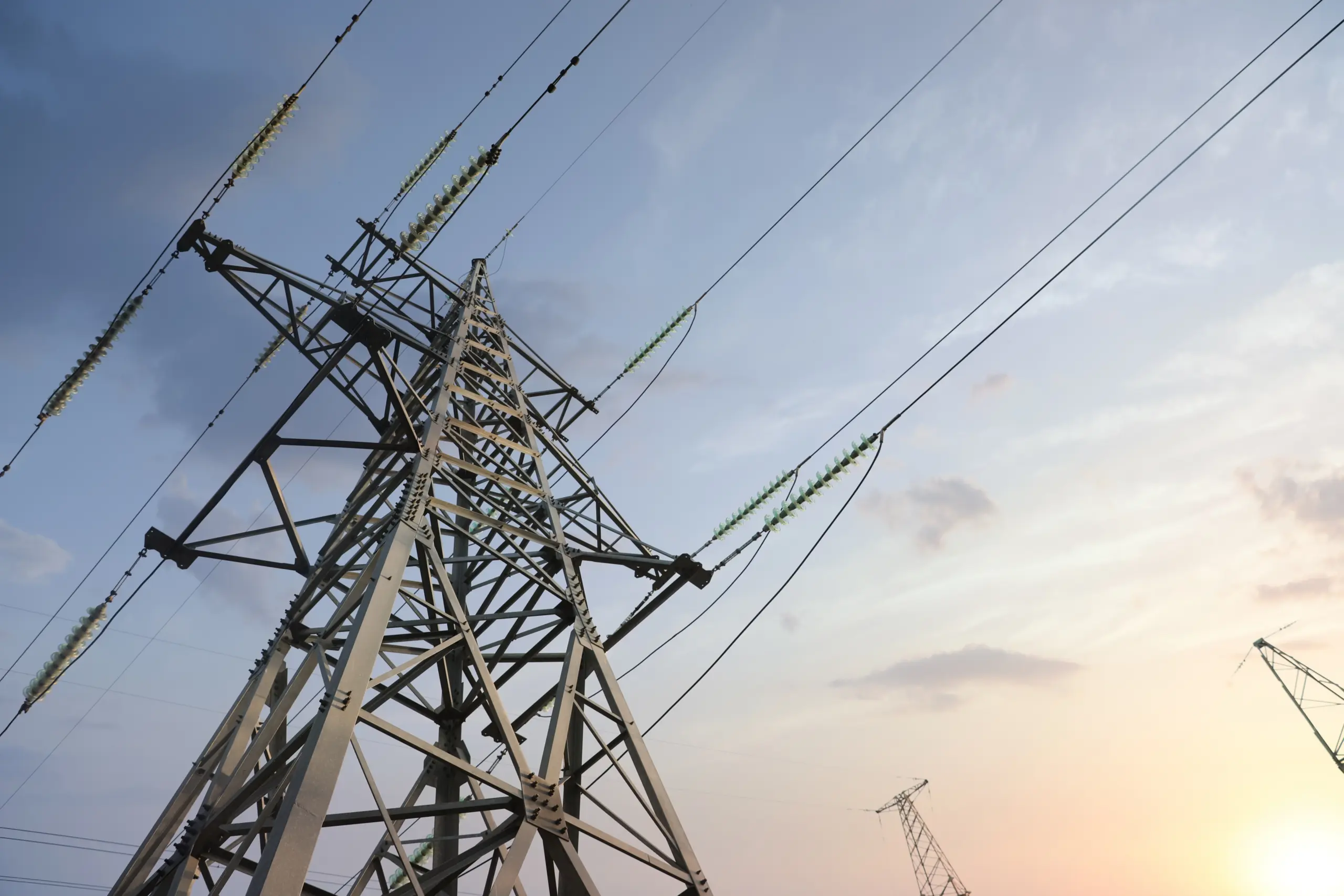
They are high-voltage cables that carry power over long distances across the island, usually through mountainous areas. These cables are difficult to access when making repairs.
Today we are in the midst of a transformation in our electricity system moving from a highly centralized system based on fossil sources, to a more distributed system based on renewable energy. It means that we generate energy close to where it is consumed. Rooftop solar systems are an example of distributed and renewable energy. By generating power close to points of consumption, we improve resilience and ensure consumers have a constant supply of energy.
Want to learn more about Puerto Rico’s Electric System?
Learn about Puerto Rico’s centralized electrical system.